Results
Monthly average = 16 months total ÷ 16. Real months vary; this is arithmetic, not a trend line.
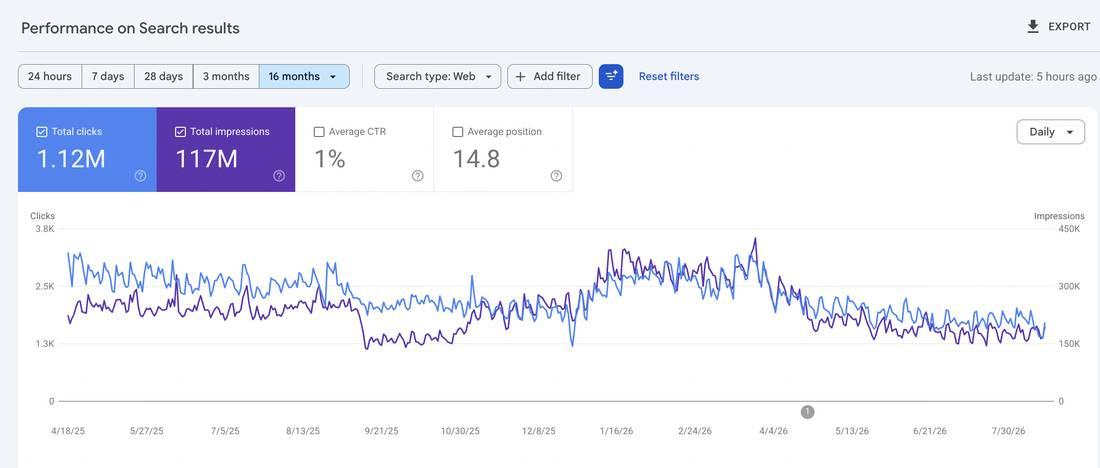
Source: Google Search Console, web search, 16 months. Client name withheld.
The situation
A UK vehicle-scrapping service relied on a large programmatic page architecture, where templates generate pages at scale.
At that scale the template itself becomes part of the ranking strategy: weak templates multiply into thousands of thin pages.
What I did
- 01
Audit before action
Opened with an initial audit, a master analysis, and a site-drop technical analysis, then a prioritized action plan.
- 02
Manufacturer pages at scale
Built manufacturer landing pages at scale from content outlines and finalized their FAQs.
- 03
Market expansion research
Researched expansion into scrap yards, car breakers, and the Ireland market.
- 04
Technical hardening
Optimized robots.txt, Core Web Vitals, schema, and staging-domain linking.
- 05
Link profile cleanup
Cleaned toxic backlinks and ran outreach.
Forensic Implementation Stepper
Correlating Losses to Google Updates & Server Logs
Isolating whether search visibility drops resulted from site-wide algorithmic quality reassessment, template-level duplicate risks, or server-level crawl bottlenecks.
Consolidating Low-Threshold URLs to Restore Crawl Equity
Pruning low-value parameter URLs, dynamic facets, or thin pages to protect the domain's holistic quality threshold value and prevent cannibalization.
Restructuring Taxonomies with Entity-Attribute-Value Models
Building structured category-to-pillar information architecture and deploying JSON-LD schema graphs to clearly delineate entity relationships.
Validating Metric Trajectory & Deploying llms.txt
Tracking weekly impression and CTR recovery in Search Console while standardizing /llms.txt for retrieval in AI Overviews and answer engines.